An SEO audit is a structured review of your website’s technical health, content quality, and search visibility that identifies what is blocking your rankings and conversions. Understanding how SEO audits work gives marketing professionals and business owners a clear roadmap for fixing the right problems in the right order. The process covers four core areas: technical infrastructure, on-page content, backlink authority, and AI search readiness. When conducted with business goals at the center, an audit stops being a list of errors and becomes a prioritized plan for growth. Seotonic has run more than 3,000 campaigns globally and consistently finds that audits aligned to commercial objectives deliver the strongest ROI.
How SEO audits work: types and what each one covers
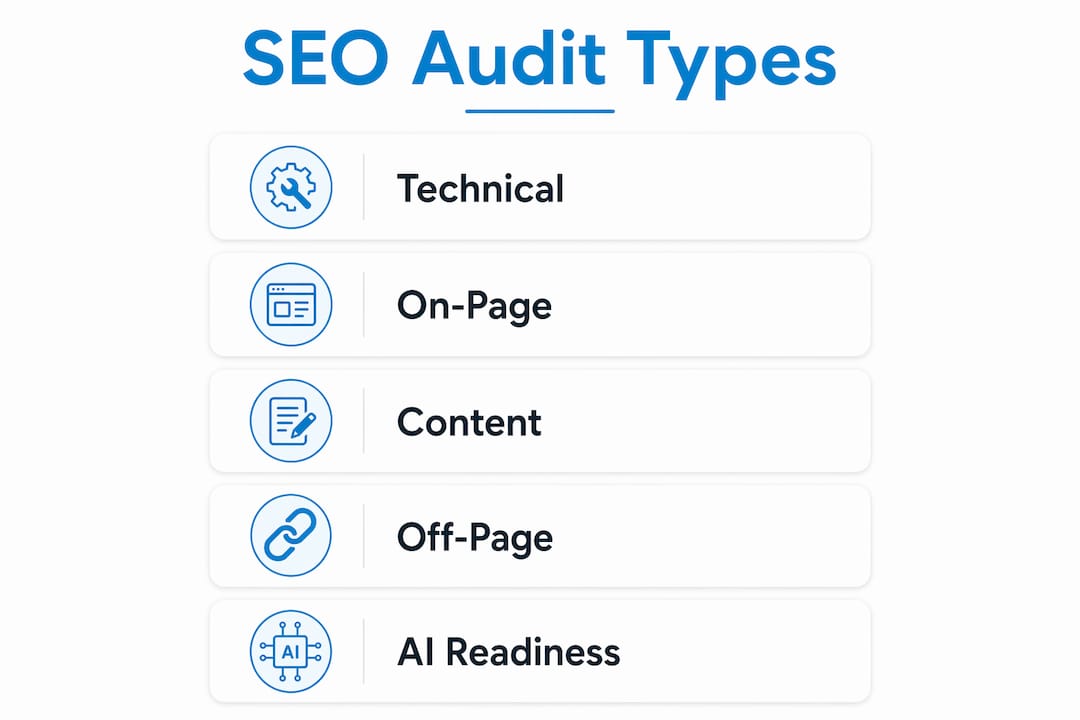
A complete SEO audit examines five distinct dimensions of your website. Each type targets a different set of problems, and skipping any one of them leaves blind spots in your strategy.
Technical SEO audit reviews the foundation your site is built on. It checks crawlability, indexability, site speed, Core Web Vitals, redirect chains, and canonical tags. A broken redirect chain, for example, can silently waste crawl budget and prevent Google from indexing your most important pages. Seotonic’s guide on technical audit elements outlines the specific factors that matter most.

On-page SEO audit examines individual page signals. Title tags, meta descriptions, heading structure, internal linking, and structured data all fall here. A page with a missing H1 or a duplicate title tag sends conflicting signals to search engines.
Content SEO audit identifies thin pages, decaying content, keyword cannibalization, and gaps where your site fails to match user intent. A blog post that ranked well two years ago but now sits on page three is a classic content decay case that a content audit surfaces immediately.
Off-page SEO audit analyzes your backlink profile. It flags toxic links that could trigger a Google penalty, identifies lost links worth reclaiming, and benchmarks your domain authority against competitors.
AI search readiness audit is the newest and most overlooked category. AI engines like ChatGPT, Perplexity, and Gemini now drive discovery for millions of queries. Most traditional audits miss this entirely, which means businesses lose visibility on platforms that are growing fast.
| Audit type | Primary focus | Key output |
|---|---|---|
| Technical SEO | Crawlability, speed, indexing | Error fix list with priority scores |
| On-page SEO | Titles, headings, structured data | Page-level optimization checklist |
| Content SEO | Thin content, intent gaps, decay | Content update and removal plan |
| Off-page SEO | Backlinks, authority, toxic links | Link disavow and outreach plan |
| AI search readiness | AI crawlability, citation signals | Content restructuring recommendations |
What are the steps to perform an SEO audit?
The SEO audit process follows a clear sequence. Skipping steps or jumping straight to fixes without data leads to wasted effort.
-
Define your business goals. Before touching any tool, identify what success looks like. Is the goal lead generation, e-commerce revenue, or brand visibility? This focus determines which pages and metrics matter most. An audit for a SaaS company prioritizes trial signup pages differently than an audit for a local service business.
-
Crawl the site. Use a crawling tool such as Screaming Frog to collect data on every URL. The crawl surfaces broken links, redirect chains, duplicate content, missing meta tags, and crawl errors. Following a structured checklist during this step ensures no technical element gets missed.
-
Check indexing and performance data. Pull reports from Google Search Console to see which pages are indexed, which have coverage errors, and which queries drive impressions. Layer in Google Analytics to understand traffic patterns, bounce rates, and conversion behavior.
-
Audit on-page and content quality manually. Automated tools flag errors but cannot judge whether a page actually answers the user’s question well. Manual review identifies thin content, poor readability, and mismatched keyword intent that crawlers miss.
-
Analyze the backlink profile. Use a backlink analysis platform to review the quality and quantity of inbound links. Flag toxic domains for disavowal and identify high-authority sites worth targeting for outreach.
-
Assess Core Web Vitals and mobile performance. PageSpeed Insights provides LCP, INP, and CLS scores that directly affect rankings. Mobile-friendliness is not optional. Google uses mobile-first indexing for all sites.
-
Prioritize findings by impact and effort. Not every issue deserves equal attention. Evaluating each finding by its likely impact on rankings and the effort required to fix it creates a practical roadmap. A broken canonical tag on your homepage outranks a missing alt tag on a sidebar image.
-
Document and present the findings. A good audit report explains each issue in plain language, shows the data behind it, and gives a clear fix. Developers and content teams should be able to act on it without needing an SEO translator.
Pro Tip: Start every audit by pulling your top 20 revenue-driving pages from Google Analytics. Run your technical and content checks on those pages first. Fixing issues on high-value pages delivers measurable business results faster than fixing errors on low-traffic pages.
What tools and metrics are essential for a thorough SEO audit?
The right tools make the difference between a surface-level scan and a genuinely useful audit. Backing your audit with quantitative data from multiple sources prevents misdiagnosis and ensures fixes are grounded in evidence.
- Screaming Frog or equivalent crawling tool: Maps the full site structure, identifies broken links, duplicate content, redirect issues, and missing tags. The free version handles up to 500 URLs, which covers most small business sites.
- Google Search Console: Shows exactly which pages Google has indexed, which have errors, and which queries generate clicks and impressions. The Coverage report alone can reveal indexing problems that have been silently killing traffic for months.
- Google Analytics: Tracks user behavior, traffic sources, session duration, and conversion paths. Pairing Analytics data with Search Console data reveals which pages attract traffic but fail to convert.
- PageSpeed Insights: Reports on Core Web Vitals including Largest Contentful Paint, Interaction to Next Paint, and Cumulative Layout Shift. These metrics directly influence Google rankings.
- Backlink analysis platforms: Evaluate the quality, quantity, and relevance of inbound links. They also identify toxic links that could harm your domain authority.
- Keyword research tools: Identify content gaps, declining keyword rankings, and opportunities where competitors outrank you on high-intent queries.
- AI visibility checkers: Assess whether AI search engines can read and cite your content. This is a new but growing category of audit tool that addresses the shift toward AI-generated search results.
What are the key benefits of regular SEO audits?
Regular SEO audits prevent ranking loss and create a sustained path to traffic growth. The benefits go well beyond fixing errors.
Audits uncover crawlability and indexing problems that silently block pages from appearing in search results. A site can look perfectly functional to a human visitor while Google is unable to index half its pages. Fixing these issues often produces ranking improvements within weeks.
Content audits align your pages with current user intent. Search behavior shifts over time, and content written three years ago may no longer match what people are actually searching for. Updating or consolidating underperforming pages improves engagement and reduces bounce rates.
Off-page audits protect your domain authority. Toxic backlinks from spammy or penalized sites drag down your rankings. Identifying and disavowing them removes a drag on your overall SEO performance. Simultaneously, finding lost links worth reclaiming can recover authority you already earned.
Audits also prepare your site for AI-driven search environments. Structured data, clear content organization, and authoritative sourcing all improve the likelihood that AI engines cite your content. This is now a measurable competitive advantage.
The most practical benefit is a data-driven investment roadmap. Instead of guessing where to spend your SEO budget, an audit tells you exactly which fixes will move the needle on business growth and which issues can wait.
Key Takeaways
A well-executed SEO audit is the most direct path from guessing about your website’s problems to knowing exactly what to fix and why.
| Point | Details |
|---|---|
| Start with business goals | Define commercial objectives before collecting data to ensure fixes support revenue, not vanity metrics. |
| Cover all five audit types | Technical, on-page, content, off-page, and AI readiness audits each catch different problems. |
| Use layered tools | Combine Google Search Console, Analytics, PageSpeed Insights, and crawling tools for complete coverage. |
| Prioritize by impact and effort | Fix high-impact issues on revenue-driving pages first to see measurable results faster. |
| Audit regularly | Ongoing audits prevent content decay, protect backlink health, and keep pace with algorithm changes. |
Why most SEO audits miss the point entirely
After working on SEO campaigns across dozens of industries, I have seen the same mistake repeated constantly. Teams run a crawl, generate a report with 400 errors, and then spend three months fixing broken image alt tags and minor redirect chains while their highest-revenue pages sit with thin content and zero internal links pointing to them.
The most common audit failure is starting with the tool output instead of starting with the business question. A 404 error on a page that gets zero traffic is irrelevant. A missing structured data markup on your product pages that prevents rich snippets from appearing in Google Shopping is a revenue problem. Those two issues look identical in a raw audit report, but they are not remotely equivalent.
The second mistake I see is treating an audit as a one-time event. Search algorithms update, competitors publish new content, and your own site changes constantly. An audit conducted in january becomes outdated by april. The businesses that consistently outrank their competitors treat auditing as a quarterly discipline, not an annual project.
The third challenge is AI search readiness. Most marketing teams have not yet built AI visibility into their audit process. If ChatGPT or Perplexity cannot parse and cite your content, you are invisible to a growing segment of searchers. This is not a future concern. It is happening now, and the gap between businesses that audit for AI readiness and those that do not is widening every month.
The fix is straightforward. Start every audit by listing your top five business goals. Map each goal to the pages and metrics that support it. Then run your audit through that lens. The result is a prioritized plan that your team can actually execute, not a spreadsheet of errors that paralyzes everyone.
— Anil
Seotonic’s SEO audit service: built around your business goals
Seotonic’s professional SEO audit goes beyond automated error reports. Every audit starts with your commercial objectives, whether that is lead generation, e-commerce revenue, or local visibility, and maps findings directly to the metrics that matter to your business.
With over 20 years of experience and more than 3,000 global campaigns, Seotonic uses advanced crawling tools, Google Search Console data, Core Web Vitals analysis, and AI search readiness checks to build a complete picture of your site’s performance. The output is a prioritized remediation plan your team can act on immediately. If you want to understand exactly where your website stands and what to fix first, the SEO audit checklist and full audit service are ready to put to work for you.
FAQ
What is an SEO audit?
An SEO audit is a structured review of a website’s technical health, content quality, and search visibility. It identifies issues blocking rankings and conversions, then prioritizes fixes based on business impact.
How often should you conduct an SEO audit?
A full SEO audit should be conducted at least once per quarter. Sites that publish frequently or operate in competitive markets benefit from monthly technical checks.
What does an SEO audit checklist include?
A thorough SEO audit checklist covers crawlability, indexing, Core Web Vitals, on-page tags, content quality, backlink profile, and AI search readiness. Each category requires both automated tools and manual review.
How long does an SEO audit take?
A basic technical audit for a small site takes one to two days. A comprehensive audit covering technical, content, off-page, and AI readiness factors for a large site typically takes one to two weeks.
What is AI search readiness in an SEO audit?
AI search readiness checks whether AI engines like ChatGPT, Perplexity, and Gemini can crawl, read, and cite your content. It is now a standard component of a complete audit because AI-driven discovery is a growing traffic source.