
Real estate blog SEO is the process of optimizing your blog content to rank higher in search results, attract targeted traffic, and convert visitors into clients. Understanding why real estate blog SEO matters is no longer optional: 97% of homebuyers use the internet during their home search, and over 52% find their home online. That means your blog is either working as a lead generation asset or sitting invisible while competitors capture your prospects. This guide breaks down exactly how blog SEO builds visibility, generates qualified leads, and compounds in value over time.
Why real estate blog SEO matters for your online visibility
Real estate blog SEO, known in the industry as organic search optimization, directly determines whether buyers and sellers find you or your competition first. When someone searches “best neighborhoods in Austin for families” or “how to sell a home fast in Denver,” Google ranks the most relevant, well-structured content. Your blog is the vehicle that delivers that content.
SEO increases your rankings for targeted local keywords. A buyer searching for homes in a specific zip code or school district is already qualified. Ranking for those searches puts you in front of people who are ready to act, not just browsing.

Organic SEO leads close at 14.6%, compared to just 1.7% for outbound leads like cold calls or direct mail. That gap exists because SEO attracts people who are already searching for what you offer. The intent is built in.
Consistent blog publishing also signals to Google that your site is active and authoritative. Search engines reward sites that regularly add fresh, relevant content. An agent who publishes two focused posts per month builds more search equity than one who publishes ten generic posts and then goes quiet.
Pro Tip: Target one specific local keyword per blog post. “Homes for sale in Scottsdale under $500k” will outperform “real estate tips” every time because it matches exactly what a buyer types.
- Blog posts targeting local search terms attract buyers and sellers in your market
- Consistent publishing builds domain authority over time
- High-intent organic visitors convert at significantly higher rates than paid traffic
- Each indexed post acts as a permanent entry point to your website
What content strategies make real estate blogs effective for SEO?
The most effective real estate blog content answers the exact questions buyers and sellers ask before they ever contact an agent. This approach is called Answer Engine Optimization (AEO), and it is reshaping how agents should write.
Here is how to build a content strategy that actually ranks:
-
Build content clusters around local topics. A content cluster groups related posts under one central topic. For example, a “Moving to Phoenix” hub page links to posts on neighborhoods, schools, commute times, and market trends. Content clusters signal expertise to both search engines and AI systems, improving your ranking across the entire topic.
-
Answer early-stage questions. Most buyers spend months researching before they contact an agent. Blogging before buyers are ready to transact builds trust and familiarity that pays off when they finally reach out. Write posts like “What to know before buying your first home in Chicago” or “How long does it take to sell a house in Miami?”
-
Prioritize local specificity over generic advice. Locally focused blogs that answer real neighborhood questions consistently outperform generic national real estate content. “Best school districts in Raleigh” beats “tips for homebuyers” in both rankings and relevance.
-
Use clear structure in every post. Write with H2 and H3 headings that mirror search queries. Use short paragraphs and bullet points where they aid clarity. This structure helps Google extract your content for featured snippets and helps AI systems cite your answers directly.
-
Publish on a consistent schedule. Two well-researched posts per month outperform ten rushed posts. Consistency builds SEO equity. Gaps in publishing erode the momentum you have built.
Pro Tip: Use Google’s “People Also Ask” box to find the exact questions your buyers are typing. Each question is a potential blog post title.
How does SEO blogging compare to paid ads for lead generation?
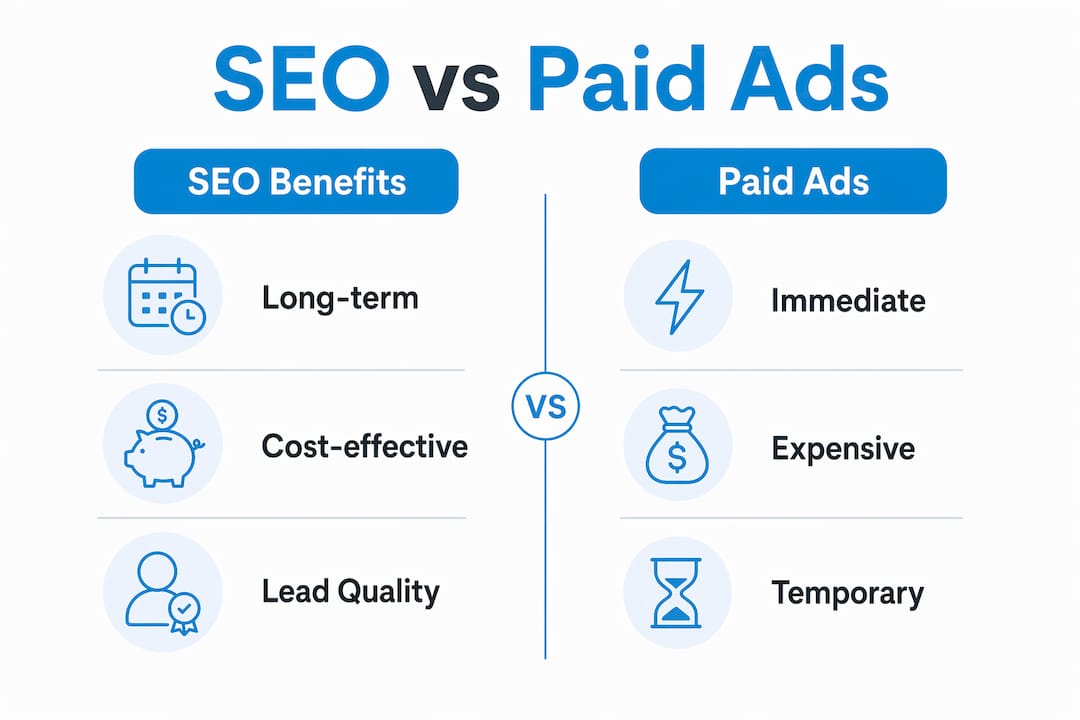
Paid advertising and SEO both generate leads, but they work in fundamentally different ways. Understanding the difference helps you allocate your time and budget more effectively.
Paid ads stop producing leads the moment your budget runs out. SEO compounds over time, meaning a post you write today can generate leads for years. That compounding effect is the core financial argument for investing in blog SEO.
Consider the cost difference. Paid ads can cost up to $12,000 per year for a single agent, and that spend produces nothing once the campaign ends. A well-optimized blog post costs time upfront and then continues ranking indefinitely. The long-term SEO advantages over paid channels are well documented.
SEO also builds brand familiarity before a prospect is ready to transact. A buyer who reads your neighborhood guides for six months already trusts you before they ever send a message. Paid ads interrupt; blog content earns attention.
Here is a direct comparison of the two approaches:
| Factor | SEO blogging | Paid advertising |
|---|---|---|
| Lead flow after stopping | Continues | Stops immediately |
| Cost over time | Decreases per lead | Fixed or rising |
| Buyer trust built | High (content relationship) | Low (ad interruption) |
| Targeting precision | Keyword and intent based | Demographic and behavioral |
| Timeline to results | 3–6 months | Immediate |
The right answer for most agents is not one or the other. SEO builds the foundation. Paid ads can accelerate short-term results. But agents who skip SEO entirely remain dependent on ad spend forever.
How is AI search reshaping real estate blog SEO in 2026?
AI-powered search tools like Google’s AI Overviews, ChatGPT, and Perplexity are changing how buyers find real estate information. The shift is significant. Instead of clicking ten blue links, buyers now get a direct answer generated from multiple sources. Your blog either gets cited in that answer or it does not exist.
This is where Answer Engine Optimization (AEO) and Generative Engine Optimization (GEO) come in. Both terms describe the practice of structuring content so AI systems can extract and cite it. AEO requires clear headings, direct answers, and structured data in every post. A blog post that buries its main point in paragraph four will not get cited. One that answers the question in the first two sentences will.
Accurate Google Business Profiles are now a primary data feed for AI recommendations. When someone asks an AI assistant “Who is the best real estate agent in Nashville?”, the AI cross-references business listings, reviews, and web content. Inconsistent or incomplete data reduces your chances of being recommended.
Pro Tip: Audit your Google Business Profile quarterly. Check that your name, address, phone number, and service areas match exactly across your website, Zillow profile, and any directory listings.
Three practices that improve your AI citation rate:
- Write direct answers in the first paragraph of every post, not after lengthy context
- Use structured data markup (Schema.org) on your blog to label content types for AI systems
- Maintain consistent business information across all platforms where your name appears
Real estate SEO is evolving toward building a local knowledge base that AI can trust and cite. Agents who organize their content into clear topic clusters with accurate supporting data will earn AI citations. Those who publish scattered, generic posts will not.
Key Takeaways
Real estate blog SEO is the single most cost-effective long-term strategy for agents who want consistent inbound leads without permanent dependence on paid advertising.
| Point | Details |
|---|---|
| SEO drives qualified traffic | Organic visitors convert at 14.6%, far above outbound lead sources. |
| Content clusters build authority | Grouping related local posts signals expertise to search engines and AI. |
| SEO compounds; ads do not | Optimized posts generate leads for years; paid ads stop when budgets stop. |
| AEO structures content for AI | Clear headings and direct answers get your blog cited in AI-generated results. |
| Local specificity wins rankings | Neighborhood-specific posts consistently outrank generic real estate advice. |
What I’ve learned after watching agents ignore blog SEO for years
Real estate agents are among the most skeptical audiences when it comes to SEO. I understand why. The results are not instant, and the industry is full of vendors promising page-one rankings in 30 days. That skepticism is earned.
But here is what I have seen consistently: agents who commit to a real estate SEO strategy for 12 months build something that no algorithm change or ad budget cut can take away. Their blog becomes a local knowledge resource. Buyers bookmark it. Sellers reference it when they are ready to list.
The agents who struggle are not the ones who write bad posts. They are the ones who write three posts, see no immediate traffic spike, and quit. SEO requires patience that most people underestimate. The compounding effect is real, but it takes time to activate.
My strongest advice: stop writing for search engines and start writing for the buyer who is six months away from calling you. Answer their questions honestly and specifically. Cover your local market in depth. Publish on a schedule you can actually maintain. That consistency, applied over time, produces results that paid ads simply cannot replicate.
The AI shift makes this even more urgent. Agents who build structured, accurate, locally specific content now will be the ones AI systems cite when buyers ask for recommendations. That is not a future trend. It is happening in 2026.
— Anil
How Seotonic helps real estate agents build lasting SEO visibility
Real estate professionals who want consistent leads from search need more than a few blog posts. They need a content strategy built around local authority, technical site health, and AI-ready structure.

Seotonic brings over 20 years of SEO experience and more than 3,000 successful campaigns to real estate clients who want measurable results. The team covers local SEO for real estate, content cluster development, Google Business Profile optimization, and technical audits that identify exactly what is holding your site back. For agents ready to move beyond paid ads and build compounding organic visibility, Seotonic’s SEO services offer a clear path from invisible to ranked.
FAQ
Why does real estate blog SEO matter more than paid ads?
SEO produces leads that compound over time, while paid ads stop delivering the moment your budget ends. An optimized blog post can generate inquiries for years at no additional cost.
How long does it take for real estate blog SEO to show results?
Most agents see meaningful ranking improvements within 3–6 months of consistent publishing. Competitive markets may take longer, but the results are durable once established.
What type of blog content ranks best for real estate SEO?
Locally specific posts that answer real buyer and seller questions outperform generic advice. Neighborhood guides, market updates, and “how to” posts tied to your specific city or zip code rank best.
What is Answer Engine Optimization and why does it matter for agents?
Answer Engine Optimization (AEO) is the practice of structuring blog content so AI search tools can extract and cite it directly. Agents who write with clear headings and direct answers get recommended by AI assistants; those who do not get skipped.
How often should a real estate agent publish blog posts?
Two well-researched, locally focused posts per month is more effective than daily generic content. Consistency and quality build SEO equity faster than volume alone.