
On-page SEO is the practice of optimizing individual web pages by adjusting content and HTML elements to improve search engine rankings and user experience. It covers everything from title tags and headings to internal links and image alt text. Tools like Ahrefs and Semrush treat on-page SEO as the foundation of any search strategy because it sits entirely within your control. Unlike backlinks or brand mentions, you can fix a title tag today and see results within days. Understanding on-page SEO techniques is the first step toward building a site that ranks and converts.
What is on-page SEO and why does it matter?
On-page SEO involves adjusting title tags, headings, internal links, and images to help both search bots and readers understand what a page is about. The goal is clarity and relevance, not keyword stuffing. When Google’s crawlers visit a page, they read HTML signals to determine topic, intent, and quality. Pages that communicate these signals clearly rank higher and attract more organic traffic.
The importance of on-page SEO goes beyond rankings. A well-structured page keeps readers engaged, reduces bounce rates, and builds trust. Semrush describes on-page SEO as foundational because it must be in place before off-site authority signals like backlinks can do their job. Think of it as setting the table before inviting guests.

What are the core elements of on-page SEO?
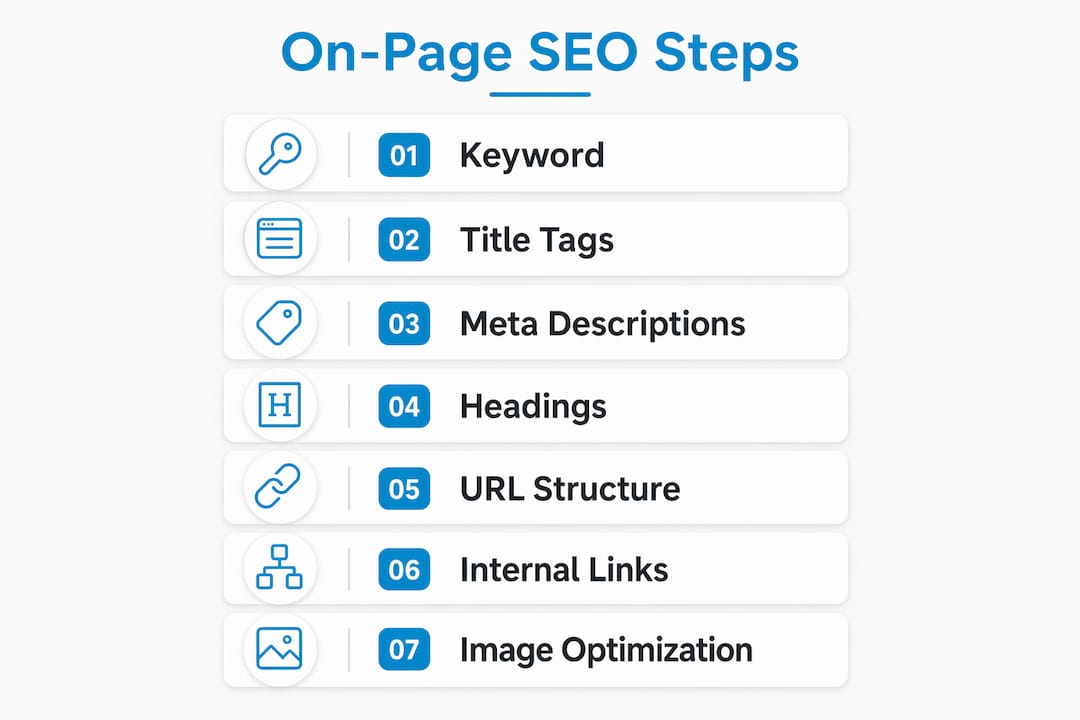
Key on-page SEO elements include keyword targeting, title tags, meta descriptions, headings, URL structure, internal linking, and image optimization. Each element plays a distinct role. Together, they tell search engines and readers exactly what your page covers.
Title tags and meta descriptions
Your title tag is the single most visible on-page ranking signal. Keep it under 60 characters, place your primary keyword near the front, and make it specific enough to earn a click. Meta descriptions do not directly affect rankings, but optimized meta descriptions increase click-through rates by giving searchers a clear reason to choose your result over the next one.
Headers, URLs, and content structure
H1 through H6 headings create a content hierarchy that both readers and crawlers follow. Use one H1 per page, and make it match the page’s primary topic. URLs should be short, readable, and include the target keyword. A URL like /on-page-seo-guide outperforms /page?id=4872 in every measurable way. For a deeper look at this, Seotonic’s guide on user-centric URL structures covers the specifics well.
Image optimization and internal linking
Every image needs a descriptive file name and an alt text attribute. Alt text tells search engines what the image shows and improves accessibility for screen readers. Internal linking improves crawlability, passes link authority between pages, and helps readers find related content without leaving your site. A page with zero internal links is an island. Connect it to your broader content structure.
Pro Tip: Audit your top 10 pages in Ahrefs or Semrush and check whether each one has at least three internal links pointing to it. Pages with no internal links rarely rank, regardless of content quality.
How does on-page SEO differ from off-page and technical SEO?
On-page SEO focuses on elements within your website that you control directly. Off-page SEO refers to external signals like backlinks, brand mentions, and social authority. Technical SEO covers site infrastructure: crawlability, site speed, schema markup, and XML sitemaps. All three work together, but on-page SEO is where you start.
The table below shows the key differences at a glance.
| SEO Type | What It Covers | Who Controls It | Example Actions |
|---|---|---|---|
| On-page SEO | Content, HTML elements, UX | You, directly | Rewrite title tags, add alt text |
| Off-page SEO | Backlinks, brand mentions | Partially you | Outreach, PR, guest posting |
| Technical SEO | Crawlability, speed, schema | You, via dev | Fix broken links, add schema |
On-page SEO is the logical first step because HTML elements like structured headings, meaningful URLs, and schema markup help search engines interpret page context before any external signals come into play. A page with weak on-page signals will not rank well even if it earns strong backlinks. Fix the foundation first.
How to implement on-page SEO strategies across the page lifecycle
On-page SEO requires a lifecycle approach. New pages need keyword alignment and structure. Established pages need freshness and ongoing refinement. Audited pages need systematic fixes. The right tactics depend on where a page sits in its lifecycle.
For new pages:
- Start with keyword research. Use Ahrefs or Semrush to identify the primary keyword and two to three supporting terms that reflect actual search intent.
- Write the title tag and H1 before drafting the body. This keeps the content focused.
- Structure the page with clear H2 and H3 subheadings that mirror the questions your audience is asking.
- Add internal links to at least three related pages on your site before publishing.
- Compress images and add descriptive alt text to every visual element.
For existing pages:
- Check Google Search Console for pages that rank on page two. These are your best refresh candidates.
- Update the title tag and meta description to reflect current search intent.
- Add new sections that cover subtopics competitors are ranking for.
- Replace outdated statistics or examples with current data.
- Review and update internal links to reflect new content published since the page went live.
AI algorithms in 2026 consider structured headings, answer-first writing, and clear formatting as ranking factors. Writing your most important answer in the first paragraph of each section is no longer optional. It is how AI-powered search surfaces your content as a direct answer.
Pro Tip: Use the Seotonic SEO maintenance checklist to schedule quarterly reviews of your top pages. Consistent upkeep outperforms one-time optimization every time.
What role do user experience and page performance play in on-page SEO?
Page experience is now a direct ranking factor. Core Web Vitals and mobile-friendliness are weighted in Google’s algorithm, and pages that fail these metrics lose ground to competitors who pass them. User experience and on-page SEO are no longer separate concerns.
The factors that matter most include:
- Largest Contentful Paint (LCP): Measures how fast the main content loads. Google targets under 2.5 seconds.
- Cumulative Layout Shift (CLS): Measures visual stability. Pages that shift around as they load frustrate readers and hurt rankings.
- Interaction to Next Paint (INP): Measures responsiveness. Slow interactive elements signal a poor experience.
- Mobile usability: More than half of all web traffic comes from mobile devices. A page that breaks on a phone loses both users and rankings.
- Accessible design: Proper heading hierarchy, sufficient color contrast, and descriptive link text improve both accessibility scores and SEO.
Page experience metrics affect rankings and user satisfaction at the same time. A fast, stable, mobile-friendly page keeps readers on the page longer. Longer dwell time signals relevance to Google. The two outcomes reinforce each other. Seotonic’s analysis of why page experience matters explains how these signals feed directly into ranking decisions.
Key Takeaways
On-page SEO is the direct, controllable foundation of search performance, and no amount of backlinks compensates for weak content structure, poor HTML signals, or slow page speed.
| Point | Details |
|---|---|
| On-page SEO is foundational | Fix title tags, headings, and content before pursuing backlinks or technical fixes. |
| Meta descriptions drive clicks, not rankings | Write them to earn the click, not to satisfy a ranking algorithm. |
| Lifecycle approach wins | New pages need structure; existing pages need freshness and updated internal links. |
| Page experience is a ranking factor | Core Web Vitals, mobile usability, and load speed directly affect where you rank. |
| AI search rewards clarity | Structured headings and answer-first writing help AI-powered engines surface your content. |
On-page SEO in 2026: what I’ve learned after 20 years of campaigns
After running more than 3,000 SEO campaigns at Seotonic, the pattern I see most often is this: marketers obsess over keywords and ignore everything else. They stuff a target phrase into a title tag, publish thin content, and wonder why the page sits on page three. Keywords are a signal, not a strategy.
The pages that consistently rank well share one trait. They are genuinely useful. The title matches what the reader wants. The headings answer real questions. The content goes deeper than the top three results already cover. No amount of technical tweaking compensates for a page that fails to satisfy the reader’s intent.
The other mistake I see constantly is treating on-page SEO as a one-time task. You publish a page, tick the checklist, and move on. Six months later, competitors have updated their content, earned new links, and pushed you down. On-page SEO is a maintenance discipline, not a launch checklist. The sites that hold their rankings are the ones with a quarterly review process built into their workflow.
One more thing worth saying plainly: on-page SEO reinforces content quality; it does not replace it. Structured headings and clean URLs help search engines understand your page. But if the content underneath those headings is thin or generic, the structure just makes the weakness more visible. Build the substance first. Then apply the signals.
— Anil
How Seotonic helps you get on-page SEO right
Seotonic brings over 20 years of white-hat SEO experience to on-page optimization across industries ranging from education to real estate. The team conducts full SEO audits that identify exactly which title tags, content gaps, and page experience issues are holding your site back.
Whether you are launching new pages or refreshing an existing site, Seotonic builds a page-level optimization plan tied to your actual business goals. The process covers keyword alignment, HTML element fixes, internal link structure, and Core Web Vitals improvements. For businesses looking at the bigger picture, the guide on SEO and business growth explains how on-page work feeds into long-term revenue gains. If your pages are not ranking where they should, a structured audit is the fastest way to find out why.
FAQ
What is on-page SEO in simple terms?
On-page SEO is the process of adjusting a web page’s content and HTML elements so search engines and readers can clearly understand what the page is about. It includes title tags, headings, URLs, images, and internal links.
Does meta description affect SEO rankings?
Meta descriptions do not directly affect rankings, but they influence click-through rates by giving searchers a reason to choose your result. A well-written meta description can increase traffic even without a ranking change.
What is the difference between on-page and off-page SEO?
On-page SEO covers elements you control directly on your website, like content and HTML tags. Off-page SEO refers to external signals like backlinks and brand mentions that come from other websites.
How often should you update on-page SEO?
Pages should be reviewed at least quarterly. Existing pages benefit from refreshed content, updated meta tags, and new internal links as your site grows and search intent evolves.
What are the most important on-page SEO factors?
The most important factors are the title tag, H1 heading, content relevance to search intent, internal linking, image alt text, and page experience metrics like Core Web Vitals and mobile usability.