
Search engine optimization for school websites is defined as the practice of structuring content, technical elements, and local signals so that Google and other search engines rank your site when parents search for schools in your area. The industry term is educational SEO, and it goes well beyond basic keyword placement. To optimize school website search engines effectively, you need admissions-intent content, fast mobile performance, and structured data that tells Google exactly what your school offers. Schools that apply these strategies consistently see more qualified traffic, more enquiry form submissions, and shorter admissions cycles. This guide gives school administrators and web managers a practical framework to improve school website SEO from the ground up.
What are the critical SEO elements schools must optimize?
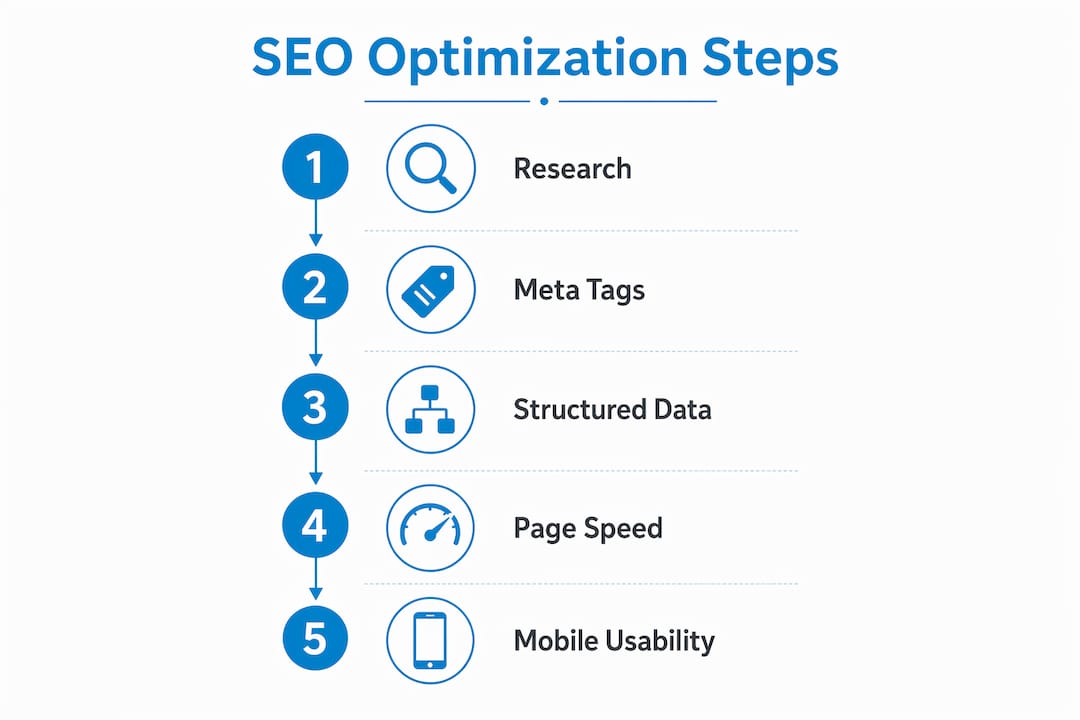
The foundation of any school SEO strategy starts with three elements: meta descriptions, structured data, and page speed. Get these right before writing a single new blog post.
Admissions-focused meta descriptions are the first thing a parent reads in search results. A generic “Welcome to Lincoln Academy” description wastes that space. Admissions-intent meta descriptions like “Admissions open for 2026-27. CBSE affiliated school in [city] with 98% board results. Enquire today.” outperform generic messages on click-through rates. That single change can lift organic traffic without touching your page content.

Structured data tells search engines what your site is about in machine-readable language. Implementing EducationalOrganization schema and localized pages for each campus improves your visibility in local search packs and Google’s Knowledge Panel. Parents searching “CBSE school near me” or “best private school in [city]” are exactly the audience you want to reach, and schema markup puts you in front of them.
Page speed and mobile performance are non-negotiable ranking factors. Over 85% of parent searches happen on mobile devices in many regions. Pages must load in under 3 seconds, meet WCAG AA accessibility standards, and render cleanly on mid-range Android phones over a 4G connection.
- Write meta descriptions with admission year, affiliation, and a direct CTA
- Add EducationalOrganization schema to your homepage and campus pages
- Test page speed with Google PageSpeed Insights and fix critical issues first
- Confirm HTTPS is active and all pages pass a mobile usability check
Pro Tip: Use Google Search Console’s “Mobile Usability” report to find pages with touch targets smaller than 44px or fonts below 16px. These two issues alone cause automatic zoom on mobile forms, which kills enquiry completions.
How to align school website content with the parent admissions journey?
Parents do not decide on a school in one visit. They move through a clear sequence: discover, research, shortlist, enquire, and visit. Your content needs to serve each stage, or you lose them to a competitor who does.
At the discover stage, parents type broad queries like “best schools in [city]” or “IB schools near me.” Your homepage and pillar pages need to rank for these terms. At the research stage, they want specifics: curriculum details, faculty qualifications, fee structures, and student outcomes. Google’s E-E-A-T framework requires schools to demonstrate Experience, Expertise, Authoritativeness, and Trustworthiness. Publishing detailed faculty bios and measurable academic outcomes signals expertise directly to Google’s ranking systems. That is not optional in 2026.
At the shortlist stage, parents compare. Strategically placed testimonials on enrollment and program pages reinforce trust at exactly the right decision point. At the enquire stage, your CTA must be visible and frictionless. At the visit stage, updated events and gallery pages confirm the school is active and welcoming.
Content elements that serve the full admissions funnel include:
- Dedicated program pages for each curriculum or grade band
- Faculty profile pages with qualifications, experience, and photos
- A parent testimonials section on key enrollment pages
- An FAQ page answering real questions about fees, transport, and admissions criteria
- Localized branch pages for multi-campus schools, each with unique content
Admissions-intent content mapped to each stage of the parent journey drives more relevant traffic and higher enquiry conversions than generic content. The difference is specificity. A page titled “Grade 6 IB Program at Lincoln Academy, Chicago” ranks better and converts better than a page titled “Our Programs.”
Which technical SEO fixes yield the biggest impact for school websites?
Technical SEO problems are the most common reason school websites underperform in search. Legacy content management systems create duplicate content, broken internal links, and slow load times without anyone noticing. Fixing these technical issues delivers faster ranking improvements than adding new backlinks alone. That is a counterintuitive finding, but it holds true across educational sites consistently.
The four highest-impact technical fixes for school websites are:
- Consolidate duplicate program pages. Many schools have three or four pages covering the same curriculum. Merge them into one authoritative landing page with a canonical URL. Google rewards clarity.
- Replace PDF-based admissions content with HTML pages. Search engines and AI systems struggle to index content embedded in PDFs. Tuition tables, application forms, and admission criteria belong on HTML pages where they can be crawled, indexed, and cited by AI search tools.
- Fix your internal linking structure. Orphan pages, pages with no internal links pointing to them, are invisible to search engines. Map your site and connect key pages to your homepage and admissions section. Good internal linking practices also speed up indexing.
- Enable SSL and fix accessibility errors. HTTPS is a confirmed Google ranking signal. WCAG AA compliance is both a legal requirement in many jurisdictions and a usability standard that reduces bounce rates.
Pro Tip: Run a free crawl with Screaming Frog or a similar tool. Filter for pages with duplicate title tags. In most school sites, program and grade-level pages are the biggest offenders. Fix title tags first because they affect both rankings and click-through rates.
What are the best practices for improving user experience to boost SEO on school sites?
User experience and SEO are the same problem viewed from two angles. When parents find your site fast, navigate it easily, and submit an enquiry without friction, Google’s engagement signals improve. That improvement feeds back into rankings.
Mobile usability specifics matter more than most administrators realize. Forms need a minimum 16px font to prevent automatic zoom on iOS and Android. Touch targets must be at least 44px tall. Color contrast must meet WCAG AA standards. These are not design preferences. They are measurable factors that affect whether a parent completes your enquiry form or abandons it.
Navigation simplicity is equally important. Parents searching for admissions information should reach the enquiry form within two clicks from the homepage. Every extra click is a drop-off point. Use a sticky header with a visible “Enquire Now” button that follows the user as they scroll. Simplified enquiry forms that ask only for a name and email initially reduce abandonment significantly. You can collect additional details in the follow-up sequence.
Key UX improvements that directly affect SEO performance:
- Load homepage hero images in WebP format to cut file size without quality loss
- Use breadcrumb navigation on all interior pages for both users and search crawlers
- Add a site search bar so parents can find specific programs without hunting through menus
- Publish new events, news, and gallery updates at least twice per month
Regularly updating website content signals activity to search engines and builds parent trust simultaneously. An events page last updated in 2023 tells both Google and parents that the school is not paying attention.
How can schools maintain and measure SEO success over time?
SEO for schools is not a one-time project. Admissions cycles repeat annually, search algorithms update frequently, and parent search behavior shifts. Maintenance is the work that protects the rankings you earn.
A practical ongoing SEO maintenance process looks like this:
- Monthly: Check Google Search Console for crawl errors, manual actions, and top-performing queries. Update any page that has dropped more than five positions.
- Quarterly: Audit meta descriptions and page titles against the current admissions cycle. “Admissions open for 2025-26” left live in march 2026 signals neglect to both parents and search engines.
- Before each admissions season: Refresh program pages with updated outcomes, new faculty profiles, and current testimonials. Apply a full SEO maintenance checklist to catch technical debt before it compounds.
- Annually: Run a full technical audit covering site speed, broken links, duplicate content, and schema markup accuracy.
Google’s emphasis on helpful content requires schools to answer real parent questions clearly and keep those answers current. A school that publishes a detailed FAQ about its admissions process and updates it every cycle builds both search authority and parent confidence. Tracking enquiry form submissions as a conversion goal in Google Analytics 4 connects your SEO effort directly to enrollment outcomes.
Pro Tip: Set up a Google Search Console alert for any drop in impressions exceeding 20% week over week. A sudden drop almost always signals a technical issue, not an algorithm change. Catching it early saves weeks of ranking recovery.
Key Takeaways
Effective school website SEO requires admissions-intent content, clean technical structure, and consistent maintenance aligned to enrollment cycles.
| Point | Details |
|---|---|
| Admissions-focused meta descriptions | Write meta descriptions with the admission year, affiliation, and a direct CTA to lift click-through rates. |
| EducationalOrganization schema | Add structured data to homepage and campus pages to appear in local search packs and Knowledge Panels. |
| Replace PDFs with HTML pages | Move tuition tables and application forms to HTML so search engines and AI tools can index them. |
| Mobile-first performance | Pages must load under 3 seconds with 16px minimum fonts and 44px touch targets for mobile enquiry forms. |
| Ongoing SEO maintenance | Run monthly Search Console checks and refresh program pages before each admissions season to protect rankings. |
Why most school websites leave enrollment on the table
I have reviewed hundreds of school websites over the years, and the pattern is almost always the same. The design looks polished, the photography is excellent, and the school clearly has a strong program. But the admissions page buries the enquiry form below three paragraphs of history, the mobile version zooms in on every form field, and the meta description reads “Welcome to our school community.” That school is invisible to the parent who typed “IB school in [city] admissions 2026” at 10 PM on a Tuesday from their phone.
The uncomfortable truth is that most school SEO problems are not content problems. They are structural problems. Duplicate program pages, PDFs hiding critical admissions information, and orphan pages with no internal links are the real culprits. I have seen schools fix these technical issues and gain first-page rankings within six weeks, without publishing a single new article.
The second mistake I see constantly is treating SEO as separate from the admissions funnel. Every page on your site is either helping a parent move toward an enquiry or pushing them away. When you apply E-E-A-T principles to faculty profiles and program pages, you are not just satisfying a Google algorithm. You are answering the exact questions a parent is asking before they trust you with their child’s education. That alignment between SEO strategy and enrollment goals is what separates schools that fill their seats from schools that wonder why their website does not convert.
— Anil
Seotonic’s educational SEO services for school websites
School administrators who want faster results without building an in-house SEO team work with Seotonic. With over 20 years of experience and more than 3,000 successful global campaigns, Seotonic delivers education institution SEO covering admissions funnel optimization, local SEO schema setup, mobile performance audits, and content strategy aligned to enrollment cycles.

Seotonic’s team handles the technical fixes, content mapping, and ongoing maintenance that most school web managers do not have time to execute alone. The agency’s approach connects directly to measurable enrollment outcomes, not just traffic numbers. Schools looking to improve their on-site search experience can also explore Seotonic’s site search optimization guide for practical next steps. Contact Seotonic to request an educational SEO audit for your school website.
FAQ
What does it mean to optimize a school website for search engines?
It means structuring your site’s content, technical elements, and local signals so Google ranks your pages when parents search for schools in your area. The process covers meta descriptions, schema markup, page speed, and admissions-focused content.
How does mobile optimization affect school website SEO?
Over 85% of parent searches occur on mobile devices in many regions, making mobile performance a direct ranking factor. Pages that load slowly or display poorly on mid-range Android phones lose both rankings and enquiry conversions.
Why should schools avoid using PDFs for admissions information?
Search engines and AI systems struggle to index content inside PDFs, which means tuition tables and application details become invisible to search. Converting that content to HTML pages makes it crawlable, rankable, and accessible to parents on any device.
How often should a school update its website for SEO?
Monthly checks in Google Search Console, quarterly meta description updates, and full program page refreshes before each admissions season are the minimum. Active sites receive better indexing than stale ones.
What is EducationalOrganization schema and why does it matter?
EducationalOrganization schema is structured data markup that tells search engines your school’s name, location, affiliations, and contact details in machine-readable format. It improves visibility in local search packs and Google’s Knowledge Panel, putting your school in front of parents searching nearby.